↓
 
Xanthos heroons

Tolun's private Turkey tours

Experienced archaeologist tour guide offering custom tours in Turkey.

  • Home
  • My Resumé
  • Testimonials
  • Accommodations
  • Transportation
  • Suggested Tours
  • Prices
  • Contact me
  • Blog

Post navigation

← Older posts
Newer posts →

Kanlidivane sinkhole and ancient city

Tolun's private Turkey tours Posted on February 23, 2020 by MarielleOctober 11, 2020
Kanlidivane_Turkey

On the way from Mersin to Alanya we turned off the main road onto the small winding village road leading us up the hill towards the place called Kanlidivane (Canytellis by ancient name). It was a gorgeous February day just a few days ago from today, sunny and warm, butterflies fluttering by, birds singing, grass was green and flowers and trees were in blossoms. I even spotted a red squirrel among the bushes. The site is in a magnificent elevated position with marvellous views over the turquoise Mediterranean sea. Being out of tourist season, we had the place almost to ourselves. Besides us there was just another family from a nearby town visiting the site that morning. There are two main attractions really, in addition to the beautiful nature – one is an ancient Greek and later Roman city, and another is a natural phenomenon – a large sinkhole, around which the city was formed.

Kanlidivane_Turkey

Looking across the sinkhole towards Basilica, Kanlidivane Turkey

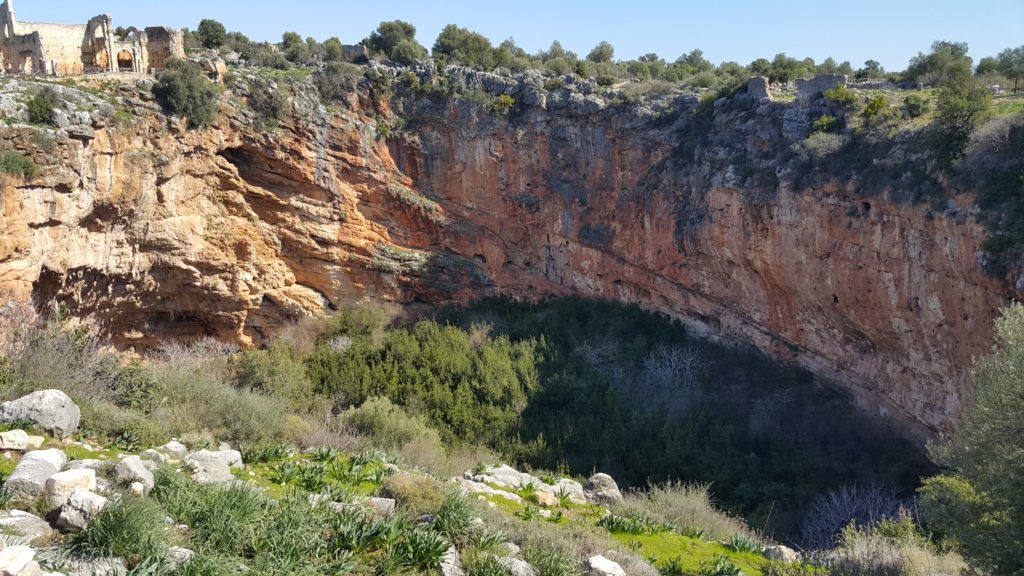
As we started walking along the pathway towards the ruins, the sinkhole appeared right after the entrance of the site. It is a huge steep hole, over 100 m in diameter and about 70 m deep. Down below there are some reliefs carved onto the walls of rocks by ancient people, but nowadays there is no access down to the bottom, one can view the landscape of the hole from up above. Along the edges of the sinkhole there have been various buildings which’ ruins are still remaining, such as olive mills, a Byzantine basilica, a tower etc.
Kanlidivane_Turkey

Sinkhole, Kanlidivane Turkey

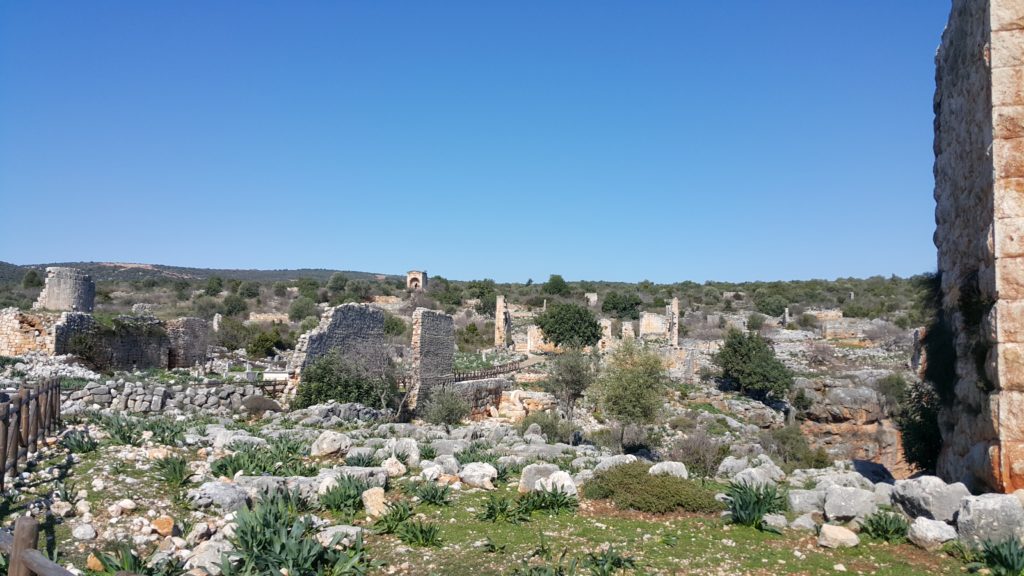
Continuing our walk we also passed the Ottoman era cemetery and the ruins of some buildings, the latest headstone read early 1970s as someone’s death year who was buried there. So it was inhabited until quite recently. Its best days though appear to be in the Greek and Roman times. Some of the most impressive buildings include aforementioned Byzantine basilica and a large mausoleum built by queen Aba for her husband and herself in ancient Greek era. The view from the mausoleum, sitting in the highest spot, is the best in my opinion, quite heavenly actually.
Kanlidivane_Turkey

City ruins, mausoleum in the distance, Kanlidivane Turkey

The site is large, one can spend hours wandering around, admiring the remnants of old civilizations, the great views over the landscapes, and quite simply breathing in the sweet air heavy with scent of flowers, listening to buzzing bees and chirping birds. I suspect that since this site is not one of the best-known ancient cities, it is probably a peaceful place also in busier tourist seasons. It may not be famous, but it is just as worthy a visit as the most well known places in Turkey. I loved it.

Kanlidivane Turkey

Vıew towards the Medıterranean sea, Kanlidivane Turkey

Posted in Uncategorized | Tagged ancient Greek, ancient Roman, Canytellis, Kanlidivane, Medıterranean, ruins, travel, Turkey | Leave a reply

Bodrum – a Pearl of Aegean Sea

Tolun's private Turkey tours Posted on January 8, 2019 by TolunJanuary 9, 2019

Written by Marielle

Bodrum is blessed with a year-round warm climate, and it gets rather hot here in summer. This makes the turquoise blue sea of this southern Aegean town all the more inviting. A lot of the life seems to revolve around the marina area, full of both beautiful old wooden sailing boats as well as fancy modern yachts glistening and swaying gently in the breeze. The seaside promenade is lined with pleasant restaurants and cafes, offering a variety of gastronomic experiences.

Bodrum marina

Bodrum marina

The famous Tomb of Mausolus

My first stop in the town was at the Tomb of Mausolus, which sits by the rather unassuming street away from the seaside hustle and bustle. I would have travelled right past it without noticing it if Tolun hadn’t pointed it out. This is the very place where the word ‘mausoleum’ comes from. Mausolus was the ruler of Halicarnassus, which is the ancient name of Bodrum, in the 4th century BC. He and his wife Artemisia decided to make it the capital of their small region of Caria, which was under the rule of Persian Empire. He admired the Greek culture and commissioned Greek sculptors and architects to get a tomb built for him as a Persian satrap. After his death his wife Artemisia finished the tomb by employing some of the best and most famous masters of that time. The resulting masterpiece was so beautiful and artistic, with many sculptures of people and animals that it became one of the Seven Wonders of the Ancient World and Romans started calling all magnificent tombs ‘mausoleums’ after Mausolus’s tomb. It looked over the city for 16 centuries, collapsing after series of earthquakes by 15th of century AD. Consequently it was looted by many and little is left of it on its site today besides the foundations and a museum with remaining sculptures on display. The site is well worth the visit however and it is in a lovely quiet and green courtyard.

Bodrum Castle and the Museum of Underwater Archaeology

The Knights of St. John arrived in 1402 AD and started building their fortress, using the remains of the Mauseoleum of Mausolus as building materials. The Order of Knights Hospitaller’s headquarters were in the Rhodes island and they decided to build another fortress in Bodrum. The four nations of the Order had each a tower built and maintained by their style in the castle: German, English, French and Italian. It was attacked by Ottoman Empire for several times until it was conquered by the Sultan Suleyman the Magnificent in the 16th century. The castle in itself is an interesting place to explore. It has a lovely garden with lots of Mediterranean plants and trees and peacocks walking around. In addition it now houses the award-winning Museum of Underwater Archaeology.
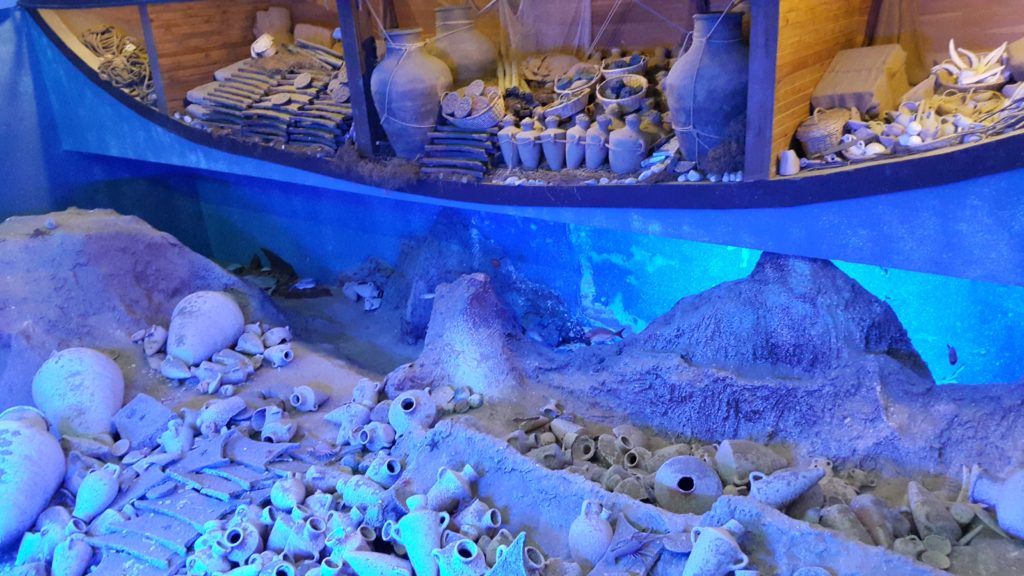
There are many fascinating findings from the shipwrecks buried in the Aegean Sea. It is biggest of its kind and includes beautiful objects from Bronze Age, Mycenaean, Hellenistic, Roman, Byzantine, Ottoman eras.

Museum of Underwater Archaeology in Bodrum

Museum of Underwater Archaeology in Bodrum

After visiting both the Mausoleum and the Bodrum Castle it is the time to stroll at the seaside promenade and stop for a fresh juice or coffee and a cake at one of the numerous cafes dotting the marina and admire the lovely views over the turquoise sea and the green hilly landscapes. If you still have the energy left to do some sightseeing, then the well-preserved ancient Amphitheatre is worth to visit as well as the Myndos Gate from the time of king Mausolus where one of the bloodiest battle against the Alexander the Great took place. Of course the boat tours are popular here. There are also some lovely seaside villages a short drive away, such as Gümüslük, where we enjoyed a beautiful sunset. It is no wonder that the area is a popular tourist destination and a place to spend holidays for both Turks as well as foreigners.

Boats at the Bodrum marina

Boats at the Bodrum marina

Posted in Uncategorized | Tagged Aegean, archaeology, Bodrum, Bodrum Castle, knights of st john, mausoleum, Mausolus, museum of underwater archaeology, travel, Turkey | Leave a reply

Post navigation

← Older posts
Newer posts →
instagram
linkedin
↑