↓
 
Xanthos heroons

Tolun's private Turkey tours

Experienced archaeologist tour guide offering custom tours in Turkey.

  • Home
  • My Resumé
  • Testimonials
  • Accommodations
  • Transportation
  • Suggested Tours
  • Prices
  • Contact me
  • Blog

Post navigation

← Older posts
Newer posts →

The importance of Anadoluhisari and Rumelihisari

Tolun's private Turkey tours Posted on April 7, 2021 by MarielleApril 22, 2021

One cannot overestimate the importance of Anadoluhisari (Anatolian Castle) and Rumelihisari (Rumeli Fortress) for the Ottomans in conquering of Constantinople in the 15th century.

Building Anadoluhisari

Middle Ages saw the turmoil in Europe, the crusades, the fighting over lands, and for political and religious power. The great Eastern Roman Empire was reduced to small territories in and around the city of Constantinople – the capital of Byzantium. While the fighting for power was going on in Europe, Ottoman Turks were advancing and increasing their territories around Byzantium. It was clear that Ottomans held Constantinople in their sights. In the final years of the 14th century Sultan Bayezid I had the fortress built on the Asian side of the Bosphorus, completed in 1394. It was the narrowest part of the strait – 660 metres wide. The fortress was to be called Anadoluhisari. Ottomans made attacks on Constantinople over the years but as it was known to be the best protected city of its time, their attempts were unsuccessful.

Anadoluhisari or Anatolian Castle in Istanbul
Anadoluhisari , view from Göksu stream
Construction of Rumelihisari

Over fifty years went by and Bayezid’s grandson young Sultan Mehmed II built another fortress on the opposite side of the Bosphorus from Anadoluhisari, completed in 1452. The new fortress on the European side of the strait was called Rumelihisari. As the sultan was only 19 years old in the year of his ascension to the throne in 1451, the Byzantines and the Latin West were not too worried as they thought him to be too young and inexperienced to be a serious military threat. However, they were proven wrong. The two fortresses were built to block any naval traffic passing through the strait without the Ottomans’ approval. That meant that in time for the siege of Constantinople no ships could pass through the Bosphorus to help the Byzantines in battle or in bringing provisions to the city.

Fall of Constantinople

And so the last bastion of the Byzantium, the magnificent city of Constantinople, was conquered by Islamic Ottoman Turks in 1453, a mere year after the Rumelihisari was built. The siege had lasted for 53 days, with attacks from both the land and the sea. That marked the end of the Eastern Roman Empire. The residents who managed to escape and hide from the soldiers were pardoned and allowed to go back to their homes (or what was left of them). The Hagia Sophia church was converted into a mosque and other Islamic symbols were erected in the city, but the Greek Orthodox Church was preserved. The city rebuilding works started and it became the capital of the Ottoman Empire, with the new name Istanbul.

Birth of Renaissance

As for the Europe, it is thought that the end of Byzantium brought the end to Middle Ages and caused the birth of Renaissance. Many intellectuals of the great Byzantium fled from Constantinople to Italy. Italy became blessed with the wealth of highly advanced scientists, philosophers, artists, poets, musicians, architects, artisans and other skilled and educated people who brought light into the dark times in Europe and thus the Renaissance began to flourish.

Anadoluhisari now

Back in the 15th century both the Anadoluhisari and Rumelihisari fortresses were built in the outskirts of the city, in rural settings. We visited Anadoluhisari recently this spring and it is now engulfed by the city of 15 million inhabitants. The castle itself was closed and we walked around it along the narrow busy streets filled with residential houses, cafes, restaurants and other businesses. The small Göksu stream is flowing by one side of the castle where the fishing boats and yachts are moored. Nearby there is a green area for the local people for recreation. It is a busy but charming neighbourhood of the city, now part of Beykoz district. Anadoluhisari is the oldest surviving Turkish construction in Istanbul.

Rumelihisari or Rumeli Fortress in Istanbul
Rumelihisari with the Sultan Fatih Mehmet Bridge in the background
Rumelihisari these days

A few summers ago we had visited Rumelihisari on the European side of the Bosphorus and that was open to public as a museum. Also it is a venue for open-air summer concerts, art-festivals an other events. An impressive site of medieval architecture and military might, it is also now just a small part of the huge vibrant city of Istanbul. Now it is situated in a leafy seaside district of Sariyer, dotted with beautiful old villas.

Modern skyscrapers and bright city lights may overshadow these two medieval castles, but their significance in the history of this ancient metropolis cannot be overshadowed nor forgotten.

Posted in Uncategorized | Leave a reply

Aigai – the city of goats

Tolun's private Turkey tours Posted on February 15, 2021 by MarielleFebruary 15, 2021
Aigai Bouleterion

We visited Aigai – a Greek and Roman antique city ruins a few days ago in February. It was a very pleasant time for a walkabout. The weather was sunny as usual in Turkey, but the temperature was cool enough to enjoy the walk among the ruins. The city buildings were scattered around quite a large area on top of the mountain. The views to the surrounding mountains, valleys and the rivers down below were magnificent. I was surprised to see so many oak trees at the site, some of them really large and impressive.

Aigai was the city situated high up on Mount Yunt (Aspordeon), in the region called Aeolia, currently within the borders of Manisa. Around 700 BC Aeolians, who had migrated to the area along the coast between Izmir and Canakkale, founded the city. It became a part of the Lydian Empire and then the Achaemenid Empire. By 3rd century BC it was incorporated into Kingdom of Pergamon, which in turn later became a part of Roman Empire. It seems that the city particularly prospered in times of the Pergamon Kingdom as some large monumental structures were built at that time.

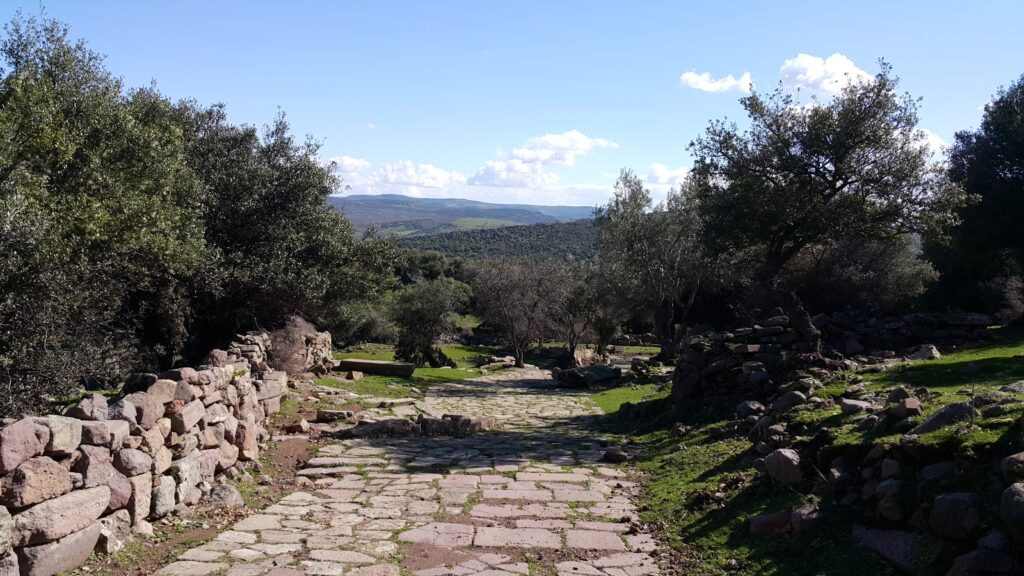
Aigai paved street
Paved street, Aigai

Importance of goats


Goats played a major part in the lives of the citizens here. The coins minted by Aigai had goats on them as a symbol of the city. People here owned herds of goats which is not surprising as the rocky terrain looks ideal for these animals. Even today we can see goats climbing the mountains around the villages in the area. The city was known for the goods produced from goat hair, skin and bones. It is thought that the parchment made here was also used in the famous Pergamon Library. As natural to this part of the world, wine was also produced.

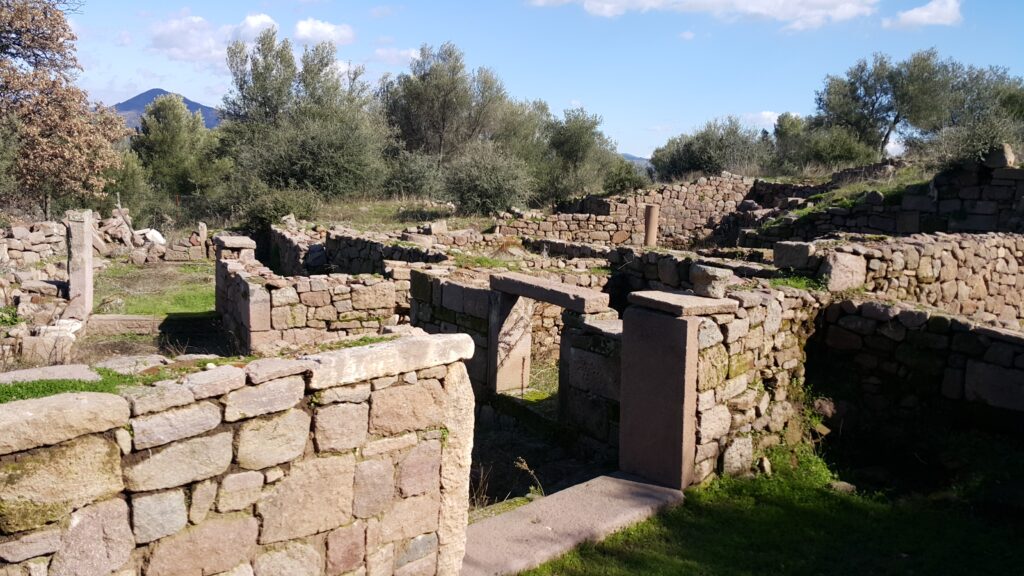
Archaeological excavations have unearthed the ruins of a district of the city where the industrial workshops were located. There are nearly 30 two-storied structures of interconnected rooms. Public latrines are also visible and its urine and faeces were likely used for textile and leather production.

Aigai workshops
Workshops, Aigai

Precious water

aigai workshop latrines
Workshop latrines


Perhaps the most interesting part of this city for me was to learn about their water use. Usually in those times water was supplied by aqueducts and pipes from higher mountains, but here such sources were not available. There are rivers flowing around the mountains down at the bottom of the valleys but it was too costly and inconvenient to haul the water up from there. So according to the information stands at the site the solution was found in rainwater.

There are hundreds of cisterns carved in the rocks all over the city area. Rainwater was collected from the roofs, courtyards and streets by the intricate infrastructure of terracotta pipes and channels running under pavements and roads leading to cisterns. The cisterns were in various sizes, some for private properties, some for public use. Even the two public baths of the city operated only on rainwater. We can say not a drop of rain was wasted. Now this is something we can learn from in the 21st century!

Aigai Bath
Public Bath, Aigai

Important buildings


Here the Gymnasion, the Gymnasion Bath and the Theatre are located next to each other. Gymnasion was essential for mental and physical education. There were classrooms as well as palaestrae in the middle of the gymnasia for physical exercise such as wrestling. The baths were right next to it to wash off after exercise.

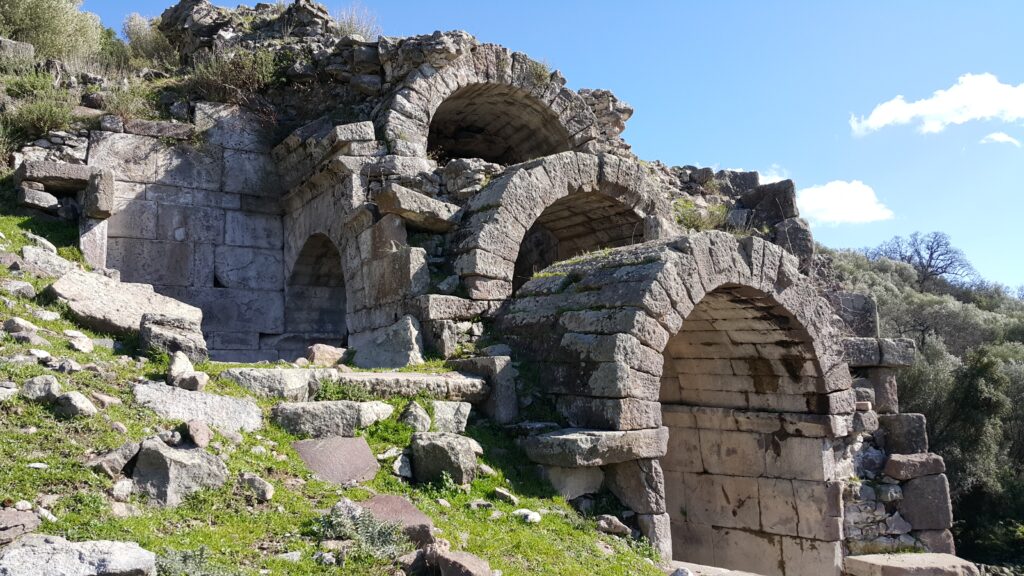
Next to these was the theatre of which the seating area and the stage are largely in ruins except for Vomitorium. Vomitorium is the entrance as well as the exit of the theatre from which the spectators are ‘vomited’ out. Here it is an impressive arched tall passageway which has remained in good condition.

Aigai theatre vomitorium
Vomitorium, Aigai

A short walk from the theatre is the Sanctuary of Athena. Athena, Zeus and Apollo were revered the most. Athena Temple is of Doric style and stands above the city centre. A Temple for Apollo was built down by the river a few kilometres from the city centre.

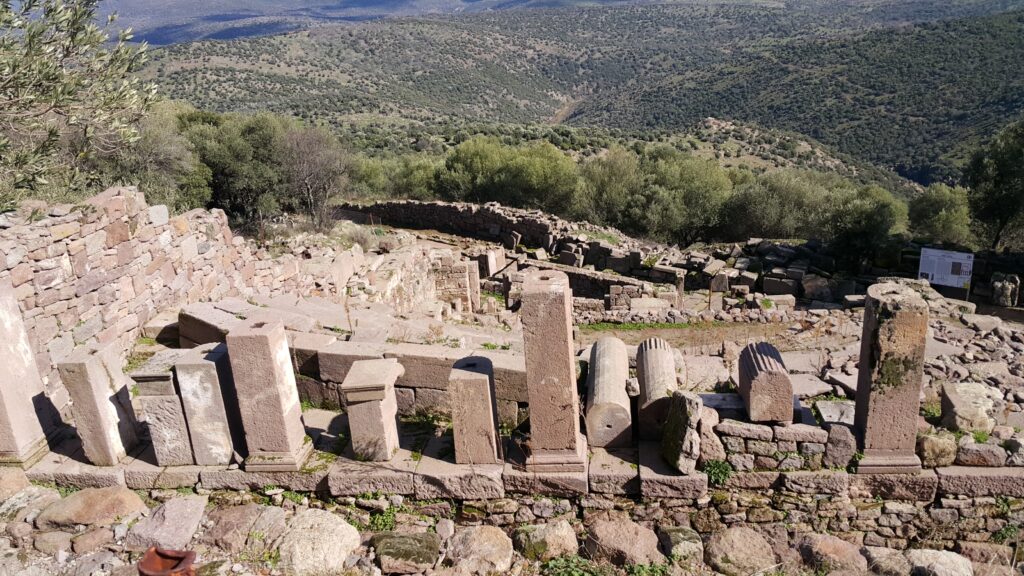
Bouleterion was the building were the City Council gathered. The front of the building was three stories high and faced the Agora Street. There there marble statues and probably the Prytaneion, where councilors had their workrooms and the sacred fire was kept. The meeting hall had the capacity for 200 councilors with semicircular rows of seats.

Aigai Bouleterion
Bouleterion, Aigai

Agora was built on different levels due to sloping terrain. The commercial market was on the lower level and the plateau on the higher level was meant for social and political gatherings. Between the upper and lower agoras was a three storey building. The shops were located on the same level as the commercial agora. The top floor of the building opened to upper agora as a stoa – a gallery with columns. I can imagine how fascinating both architecturally and practically this hub of daily activity must have been.

The city centre was surrounded by the wall and the road through one of the city gates leads up to the upper Agora. The inscription has been found on the site which thanked Roman Emperor Tiberius for his help. The same inscription was also used by other Lydian cities which were damaged during the earthquake in 17 AD. Therefore it is concluded that the city was destroyed by that earthquake and received aid for reconstruction.

Nowadays the hustle and bustle of the city is replaced by goats peacefully grazing among the ruins. The people have abandoned this once magnificent city long ago, but the goats that gave sustenance to it, remain to this day.

Aigai view
View from the top of the Bouleterion, Aigai
Posted in Uncategorized | Tagged Aigai, antique, archaeology, city, Greek, Roman, ruins, Turkey | Leave a reply

Post navigation

← Older posts
Newer posts →
instagram
linkedin
↑